

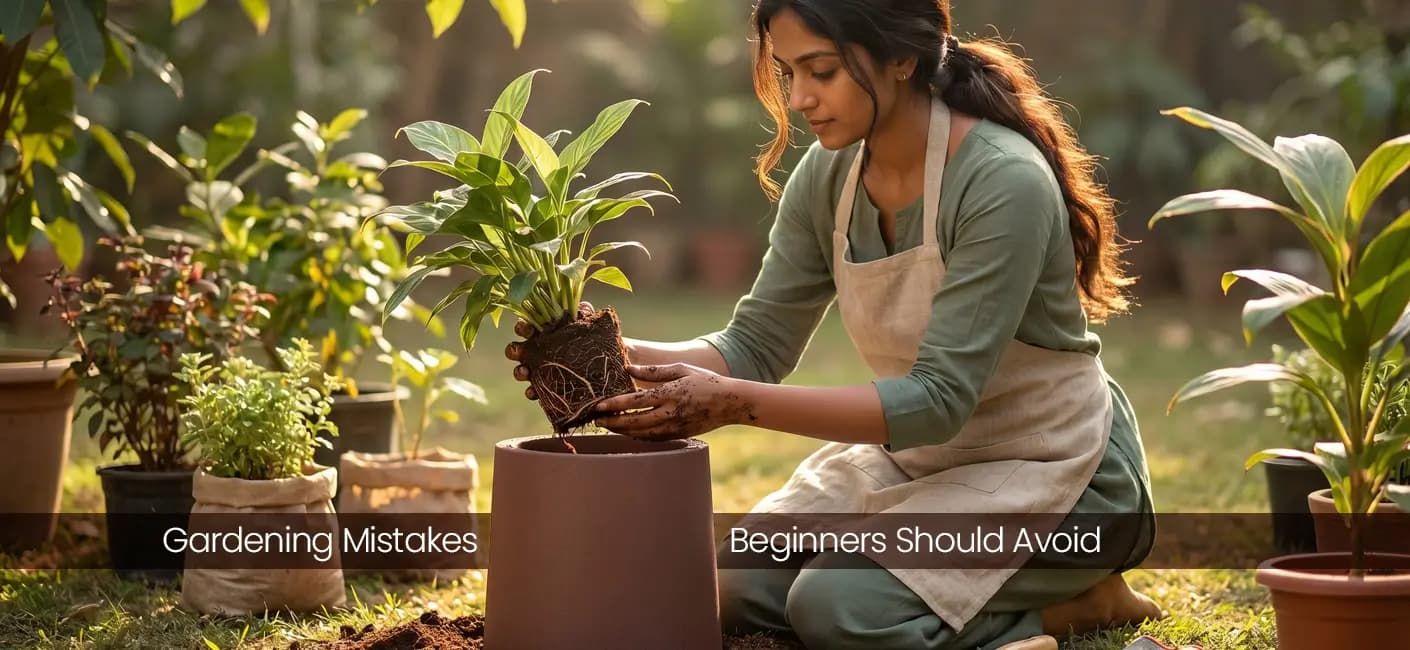
10 Common Gardening Mistakes You Should Avoid
All the mistakes in this list are for beginners that they should avoid. Don’t worry we’ve kept you in mind.
1. Overwatering Without Understanding Plant Needs

One of the most frequent gardening mistakes to avoid is overwatering. It’s easy to assume that more water means healthier growth, but in reality, excess moisture suffocates roots and leads to rot.
A better approach:
Check the top layer of soil before watering. If it feels dry, your plant likely needs hydration. If not, give it time. Consistency matters more than frequency.
2. Ignoring Climate and Seasonal Changes
Plants respond directly to their environment. What thrives in one region may struggle in another.
In India, factors like intense summer heat, monsoon humidity, and mild winters influence plant health. Internationally, frost cycles, indoor heating, and seasonal light variations play a similar role.
A better approach:
Choose plants suited to your local conditions and adapt care routines as seasons change.
3. Choosing the Wrong Planter
Planters are not just decorative elements. They directly affect root health, drainage, and growth.
A planter that is too small restricts roots, while one that is too large may retain excess moisture.
A better approach:
Select planters based on plant size and growth potential. Materials like FRP planters are often preferred for their lightweight structure, durability, and adaptability across indoor and outdoor settings.
Bonasila offers thoughtfully designed planters that focus on form and function, allowing plants to thrive while complementing modern spaces.
4. Overlooking Drainage
Even with the right watering schedule, poor drainage can harm plants. Waterlogged soil prevents roots from accessing oxygen, leading to long term damage.
A better approach:
Ensure every planter has proper drainage. Use well-structured potting mixes and avoid letting water collect at the base.
5. Using the Wrong Soil Mix
Not all soil is created equal. Garden soil can be too dense for containers, while certain plants require specialised mixes.
A better approach:
Use potting mixes designed for container gardening. For example:
- Succulents need well-draining sandy mixes
- Flowering plants benefit from nutrient-rich blends
The right soil creates the foundation for healthy growth.
6. Misjudging Sunlight Requirements
Light is one of the most important yet misunderstood factors in gardening.
Placing a sun-loving plant in a shaded corner or vice versa can limit growth and vitality.
A better approach:
Observe your space before selecting plants:
- Full sun: 6 to 8 hours of direct light
- Partial sun: 3 to 6 hours
- Indirect light: bright but not direct exposure
Let the space guide your plant choices.
7. Overcrowding Plants
While grouping plants can look visually appealing, overcrowding limits airflow and light penetration. This can lead to fungal issues and pest infestations.
A better approach:
Give each plant enough room to grow. Thoughtful spacing improves both aesthetics and plant health.
8. Ignoring Early Signs of Pests
Pests often start small but spread quickly if unnoticed. Common issues include aphids, spider mites, and mealybugs across both Indian and global environments.
A better approach:
Inspect plants regularly. Natural solutions like neem oil sprays or mild soap solutions can help manage early infestations effectively.
9. Over-Fertilizing
Fertilizers support growth, but too much can damage roots and disrupt plant balance.
A better approach:
Feed plants moderately during active growth periods. Reduce or pause fertilizing during dormant seasons. Balanced care always outperforms excessive intervention.
10. Expecting Immediate Results
Gardening is a gradual process. Growth, adaptation, and flowering take time. One of the most overlooked gardening mistakes for beginners is expecting instant transformation.
A better approach:
Focus on consistency. Observe, adjust, and allow your plants to grow at their natural pace.
The Role of Planters in Better Gardening
A well-designed planter does more than enhance visual appeal. It supports plant health through proper structure, material, and proportion.
FRP planters, for instance, are widely used in modern gardening due to their durability, lightweight nature, and clean finishes. They work well across balconies, indoor spaces, and outdoor environments.
Bonasila’s collection of planters is designed with this balance in mind – where aesthetics meet functionality, helping you create spaces that feel both refined and naturally alive.
FAQs
Q1. What are the most common gardening mistakes beginners make?
Overwatering, poor drainage, incorrect sunlight placement, and using the wrong soil are among the most common mistakes.
Q2. How often should I water my plants?
It depends on the plant type, climate, and season. Always check the soil before watering rather than following a fixed schedule.
Q3. Are FRP planters good for plants?
Yes, FRP planters are durable, lightweight, and suitable for both indoor and outdoor use. They support healthy growth when paired with proper drainage and soil.
Q4. Can I use the same soil for all plants?
No. Different plants have different soil requirements. Using the right mix improves growth and prevents issues like water retention or nutrient deficiency.
Q5. Why are my plants not growing even after proper care?
Growth depends on multiple factors including light, soil, watering habits, and climate. Even small imbalances can affect plant health.

