

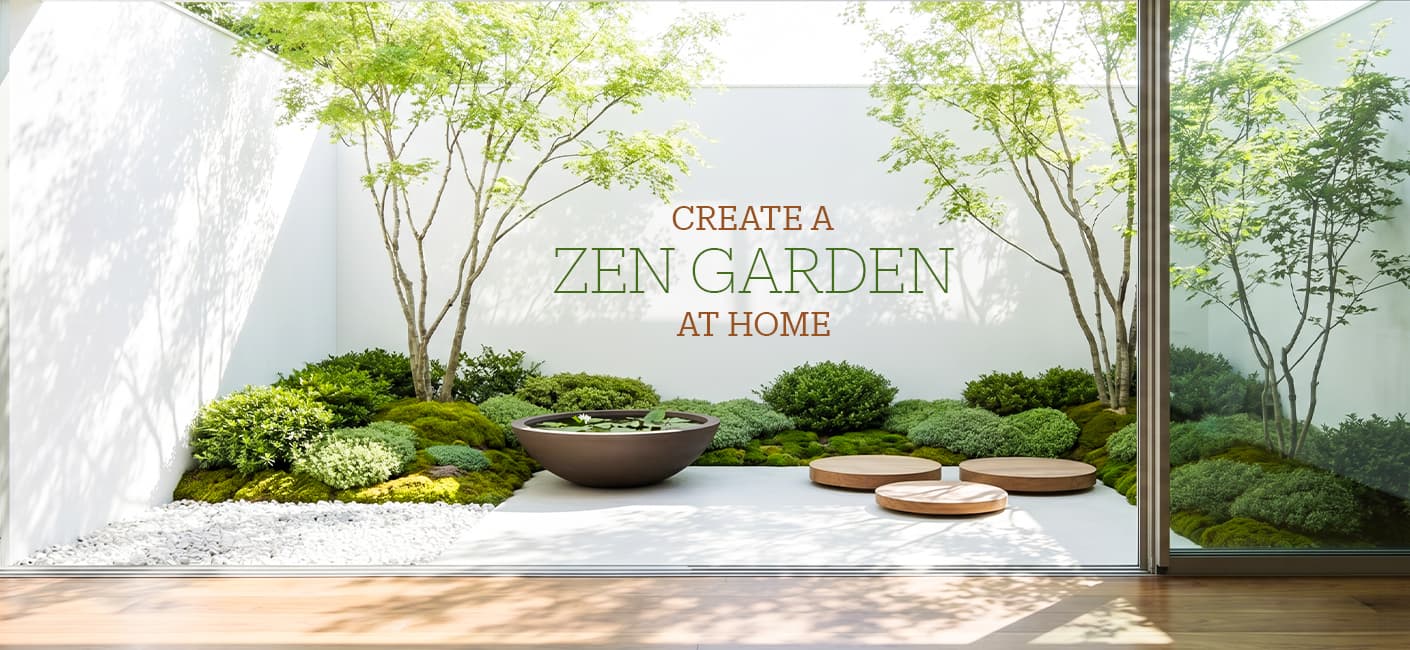
But before selecting plants and planters, it’s important to understand the philosophy that makes a Zen garden truly meaningful.
What Is a Zen Garden?
A Zen garden, also known as a Japanese rock garden, is a carefully designed landscape that encourages contemplation, balance, and tranquility. Traditionally featuring rocks, gravel, plants, and open space, Zen gardens are designed to represent nature in its simplest form.
More than just an aesthetic arrangement, a Zen garden reflects mindfulness and harmony with the natural world.
Understanding Zen garden philosophy is the first step toward creating one that feels authentic and peaceful.
The 7 Principles of a Zen Garden
Every successful Zen garden is guided by seven timeless principles.
1. Austerity (Koko)
Less is more.
Zen gardens avoid unnecessary decoration and focus on essential elements. Instead of filling every corner, allow space for the eye and mind to rest.
2. Naturalness (Shizen)
Nature should feel effortless.
Choose organic materials, natural textures, and plants that complement the surrounding environment rather than overpower it.
3. Asymmetry (Fukinsei)
Perfect symmetry rarely exists in nature.
Position plants, stones, and decorative elements in an intentionally unbalanced way to create visual harmony and movement.
4. Mystery (Yugen)
A Zen garden should reveal itself gradually.
Partially hidden plants, layered greenery, and winding paths create a sense of curiosity and encourage exploration.
5. Unconventionality (Datsuzoku)
Break free from predictable layouts.
Unexpected arrangements can make a garden feel more personal and inspiring while staying true to Zen philosophy.
6. Stillness (Seijaku)
Stillness is the soul of a Zen garden.
Every element should contribute to a sense of calm, allowing the space to become a refuge from everyday distractions.
7. Balance Through Simplicity
While not always listed separately, balance emerges naturally when the previous six principles are thoughtfully combined.
The result is a garden that feels peaceful, intentional, and timeless.
How to Build a Zen Garden at Home
Creating a Zen garden does not require a large outdoor area. The key is thoughtful design rather than scale.
Step 1: Select a Quiet Space
Choose a location where you can relax without frequent interruptions. A balcony, patio, courtyard, terrace, or indoor corner can all work beautifully.
Step 2: Establish a Neutral Foundation
Use gravel, pebbles, stone, wood, or natural flooring materials to create a calming backdrop.
Step 3: Introduce Structural Elements
Add rocks, stepping stones, or sculptural planters to create focal points within the space.
Step 4: Choose Plants Carefully
Select plants with elegant forms, calming colours, and minimal maintenance requirements.
Step 5: Keep It Uncluttered
Avoid overcrowding. Zen gardens rely on restraint rather than abundance.
Best Japanese Plants for a Zen Garden
The right plants help establish the character of a Zen garden.
1. Japanese Maple
Known for its graceful form and delicate foliage, Japanese Maple introduces seasonal beauty and visual softness.
2. Bamboo
A symbol of resilience and simplicity, bamboo adds height, texture, and gentle movement.
3. Japanese Forest Grass
Its flowing appearance creates softness around rocks, pathways, and planter arrangements.
4. Bonsai
A classic element of Japanese gardening, bonsai embodies patience, balance, and craftsmanship.
5. Moss
Often used in traditional Zen gardens, moss introduces texture and a sense of age and tranquility.
6. Azalea
Azaleas add subtle seasonal colour while maintaining a refined appearance throughout the year.
7. Juniper
Popular in Japanese landscapes and bonsai cultivation, juniper offers year-round greenery and structure.
Best Bonasila Planters for a Zen Garden
The choice of planter can greatly influence the overall mood of a Zen garden.
1. Tagaro

Its bowl-shaped designer Planter feels naturally at home in Zen-inspired settings. Perfect for moss gardens, bonsai displays, and low-growing plant arrangements.
2. Orino
Inspired by traditional planter forms, Orino complements the timeless character of Japanese gardens while blending seamlessly into both indoor and outdoor spaces.
3. Fubo
Its soft rounded silhouette reflects the Zen principle of naturalness and works beautifully with bonsai plants and ornamental grasses.
4. Telon
The elegant vertical form of Telon pairs exceptionally well with bamboo and other upright plants, adding balance and structure.
5. Aldero MR
Ideal for creating linear arrangements along pathways, terraces, and garden edges while maintaining a clean and organized aesthetic.
Common Mistakes to Avoid
Even the most beautiful plants can lose their impact when the garden feels cluttered.
Avoid these common mistakes:
- Using too many plant varieties
- Creating perfectly symmetrical layouts
- Adding excessive decorative objects
- Choosing brightly coloured containers that dominate the space
- Ignoring empty space as a design element
In Zen gardens, what you leave out is often as important as what you include.
Wrapping it up!
A Zen garden is more than a landscaping style. It is an invitation to slow down, observe, and reconnect with nature. By embracing the principles of simplicity, naturalness, asymmetry, mystery, and stillness, you can create a peaceful retreat regardless of the size of your home.
With thoughtfully selected plants and beautifully crafted Bonasila planters, your Japanese garden for home can become a space that inspires calm every day.
FAQs
1. What is a Zen garden?
A. A Zen garden is a Japanese-inspired landscape designed to promote peace, mindfulness, and harmony through carefully arranged natural elements.
2. How do I build a Zen garden at home?
A. Start with a quiet space, incorporate natural materials, choose calming plants, and keep the design simple and uncluttered.
3. Which plants are best for a Zen garden?
A. Japanese Maple, Bamboo, Bonsai, Moss, Juniper, Azalea, and Japanese Forest Grass are popular choices.
4. Which Bonasila planter is best for a Zen garden?
A. Tagaro and Orino are particularly suited to Zen-inspired spaces due to their organic and timeless forms.
5. Can a Zen garden be created in a small space?
A. Yes. Balconies, terraces, courtyards, and even indoor corners can be transformed into relaxing Zen gardens.

