

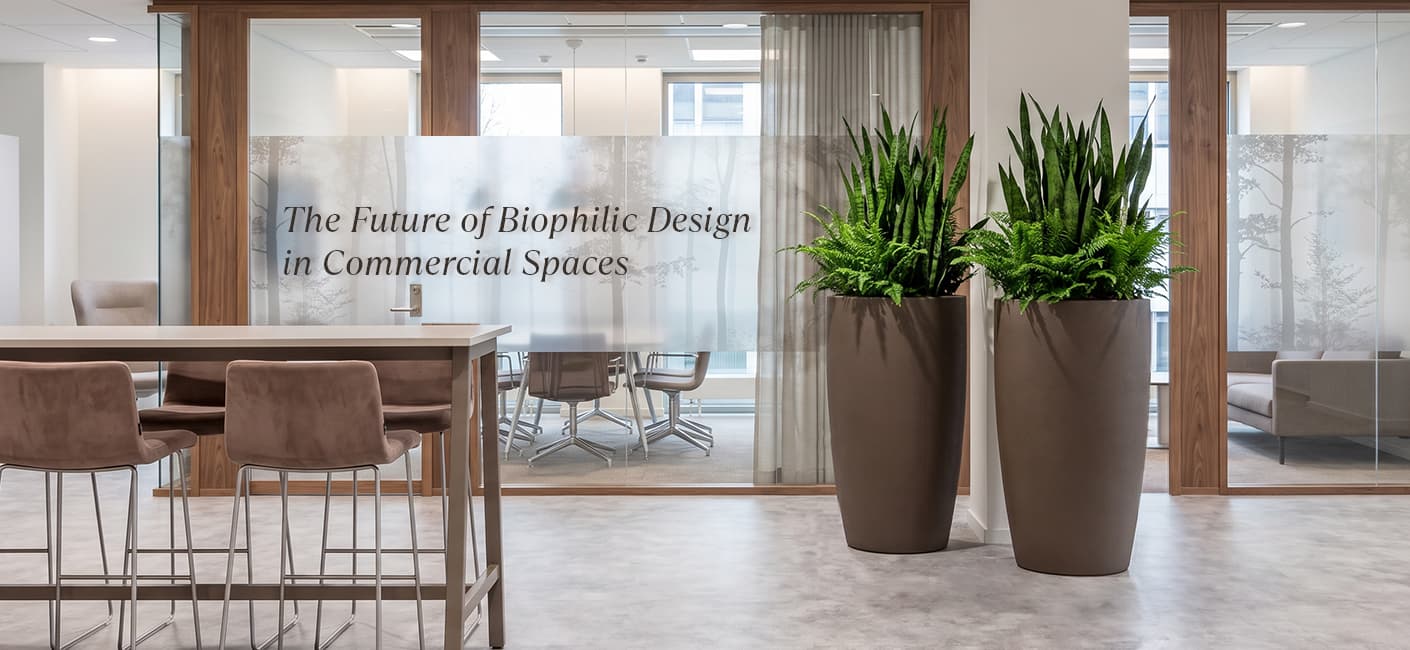
What Is Biophilic Design?

At its core, biophilic design is about bringing nature indoors. But it’s much more than placing a few plants around an office.
Biophilic spaces thoughtfully incorporate elements such as:
- Natural light
- Indoor plants and greenery
- Organic materials and textures
- Improved airflow
- Natural colour palettes
- Visual connections to the outdoors
Together, these elements create environments that feel more welcoming, balanced, and comfortable. For commercial spaces, that’s becoming increasingly important.
Why Biophilic Design Matters More Than Ever
The way people work has changed dramatically over the past few years. Employees today expect workplaces that support creativity, collaboration, and wellbeing. Businesses are realizing that great offices are no longer measured solely by square footage or amenities; they’re measured by how they make people feel.
A thoughtfully designed space can:
- Improve employee experience
- Create a stronger first impression
- Encourage collaboration
- Make workplaces feel less sterile
- Support a more positive atmosphere
In short, people enjoy spending time in spaces that feel connected to nature. And that’s exactly what biophilic design aims to achieve.
Commercial Spaces Are Becoming More Human
For years, commercial interiors were dominated by glass, metal, and rigid layouts. Today’s workplaces are taking a different approach. Soft seating, warm materials, natural finishes, and greenery are helping create spaces that feel more comfortable and inviting.
You’ll find biophilic principles appearing across:
- Offices
- Hotels
- Restaurants
- Retail environments
- Co-working spaces
- Mixed-use developments
The goal isn’t to recreate a forest indoors. It’s to create spaces where people can feel more relaxed, focused, and connected.
The Role of Planters in Biophilic Design
Plants may be the stars of biophilic design, but planters are what bring them into space.
In commercial environments, planters serve multiple purposes:
- Defining pathways
- Creating natural partitions
- Enhancing reception areas
- Softening architectural elements
- Adding visual interest to empty corners
They’re no longer simply containers. They’re design tools. This is why architects and designers are increasingly seeking reliable planters manufacturers in India that can provide solutions for projects of varying scales.
How Bonasila Fits into Modern Commercial Spaces
Bonasila’s collection of FRP planters is designed with versatility in mind. Whether it’s a reception area, a breakout zone, a hospitality project, or a corporate office, the collection offers a variety of shapes, sizes, and finishes to complement different design languages.
From matte and gloss finishes to rustic and marble-inspired textures, Bonasila’s planters make it easier to introduce greenery into commercial environments without compromising aesthetics. A huge collection of FRP Planters, particularly suitable for meeting rooms, office lobbies, and collaborative spaces where simplicity and elegance are equally important.
What Does the Future Look Like?
The future of biophilic design is likely to move in three directions.
1. More Integration
Greenery will become part of the architecture itself.
Expect to see plants incorporated into partitions, terraces, ceilings, and circulation areas rather than being added as decorative elements after construction.
2. More Purposeful Design
Designers are becoming increasingly intentional about where greenery is placed.
Plants will continue to be used to define movement, improve comfort, and create memorable experiences throughout commercial spaces.
3. More Local Solutions
As demand grows, businesses are looking closer to home for design solutions.
Working with experienced planters manufacturers in India offers practical advantages, including shorter lead times, greater customization, and products designed for local environments.
Designing Spaces That Last
The most successful commercial interiors are those that age gracefully. That means choosing materials and products that are durable, adaptable, and easy to maintain.
FRP planters continue to be a preferred choice because they offer:
- Lightweight construction
- Long-term durability
- Weather resistance
- Design flexibility
- Low maintenance requirements
For commercial projects, these qualities are just as important as aesthetics.
Final Thoughts
Biophilic design isn’t a passing trend. It’s a response to the way people want to live and work. As commercial spaces continue to evolve, we’ll see greater emphasis placed on wellbeing, comfort, and connection to nature. Plants, natural materials, and thoughtfully designed spaces will become standard features rather than optional additions.
And while greenery may be at the heart of biophilic design, it’s the details, like the right planter, that help bring these spaces to life. The future of commercial interiors is clear: greener spaces, better experiences, and environments designed with people in mind.
FAQs
Q1. What is biophilic design?
A. Biophilic design is a design approach that incorporates natural elements such as plants, light, and organic materials into built environments.
Q2. Why is biophilic design important in commercial spaces?
A. It helps create workplaces that feel more welcoming, comfortable, and connected to nature, improving the overall experience of occupants.
Q3. How are planters used in commercial interiors?
A. Planters are used to define spaces, create natural partitions, enhance entrances, and introduce greenery throughout offices and hospitality environments.
Q4. Why are FRP planters suitable for commercial projects?
A. FRP planters are lightweight, durable, weather-resistant, and available in a variety of designs, making them ideal for high-traffic spaces.
Q5. Why choose Bonasila as your planters manufacturer?
A. Bonasila offers a diverse collection of FRP planters designed to complement modern residential and commercial spaces alike.
