

Start with the Material
The material you choose sets the tone for how a planter performs outdoors.
FRP is one option that works particularly well for outdoor spaces. FRP planters are lightweight, available in different shapes and sizes, and can be finished in a variety of colours and textures.
This makes them useful across everything from home terraces and balconies to hotel entrances, restaurants and larger commercial spaces.
But material is only one part of the story.
It Should Be Ready for the Weather
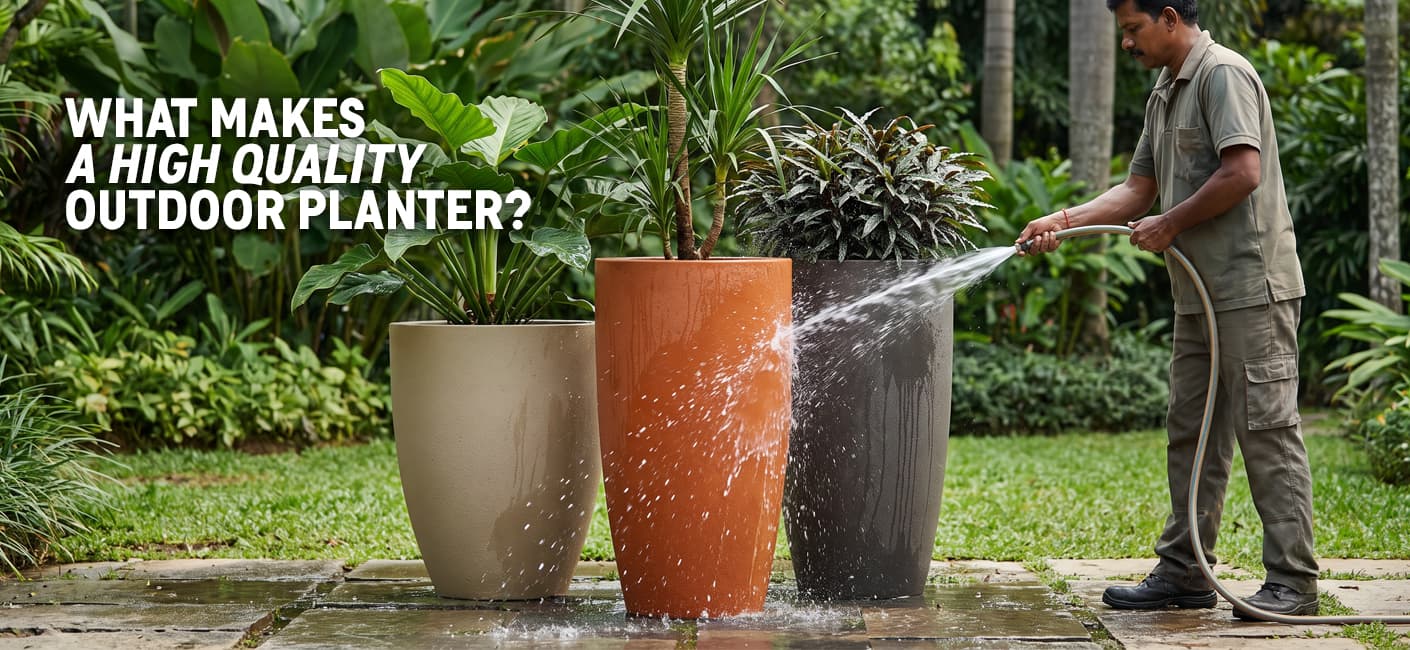
Outdoor planters spend most of their time exposed to the elements.
Sun, rain, and changing temperatures can gradually affect a planter’s appearance and performance. A good outdoor planter should be able to handle these conditions while maintaining its shape and finish.
For example, Bonasila’s FRP planters are designed for indoor as well as outdoor applications. Products such as Belios are suited to terraces, poolside areas, and hospitality spaces, while Nonez is designed for outdoor use with weatherproof and UV-resistant properties.
The idea is simple: your planter should be able to keep up with the space around it.
Don’t Overlook Drainage
A beautiful planter isn’t much use if excess water has nowhere to go. Good drainage helps prevent water from collecting around the roots, which can lead to problems such as root rot and waterlogged soil.
So, when choosing an outdoor planter, look for proper drainage provisions. Depending on the design, this could include drainage holes, removable plugs or a system that allows excess water to escape. This becomes even more important outdoors, where the planter may already be dealing with rainfall.
Think About Stability Too
Outdoor planters need to stay steady, especially in exposed areas.
The shape of the planter, the width of its base and the overall weight all play a role in how stable it feels. A well-proportioned planter can provide a good balance between being sturdy enough for outdoor use and practical enough to move when required.
Bonasila’s Belios, for example, has a broad, bowl-inspired form that gives it a grounded presence while working well with larger plants. For open terraces, entrances, and commercial landscapes, these small design decisions can make a big difference.
Give the Roots Enough Room
The right planter isn’t just about what you see above the soil. The roots need room too.
A planter that is too small can restrict root growth, while a well-sized planter gives the plant enough space to establish itself. The right size also depends on the plant, its expected growth, and where the planter will be placed.
For larger trees and statement plants, bigger planters make sense. Smaller varieties can work comfortably in more compact forms. Bonasila’s Massio collection, for instance, includes large-format planters from 3 ft. to 5 ft. tall for resorts, villas, hotels, and other expansive spaces.
The Finish Matters
Outdoor planters don’t just have to perform well. They need to look good while doing it. After all, they are part of the space.
The right finish can complement the architecture, bring out the colour of the greenery, or add another layer of texture. Matt, gloss, rustic and marble-inspired finishes can each create a very different look.
Bonasila offers a range of colours, textures, rustic finishes and marble finishes, giving designers more room to work with the overall look of a space. For a planter that sits at an entrance or in a busy hospitality area, a well-maintained finish can be just as important as its shape.
Look Beyond the Shape
A good outdoor planter should also make everyday use easier.
Think about cleaning. Moving it when needed. Changing plants. Working with liners or irrigation systems. These practical details matter, particularly in commercial and hospitality spaces where planters are regularly maintained.
This is where FRP planters can offer useful flexibility. Their range of forms and sizes makes it easier to find a planter that works not just visually, but practically too.
Choose the Planter for the Space
There isn’t one perfect planter for every outdoor setting.
A planter that works beautifully on a balcony may feel too small in a hotel entrance. A large statement planter may be perfect for a courtyard but overwhelming on a narrow terrace.
So before choosing one, look at the whole picture.
- The plant.
- The available space.
- The surroundings.
- The weather.
And how the planter will actually be used. When all of these work together, the planter feels like it belongs there.
A Planter That Works With the Outdoors
A high-quality outdoor planter isn’t defined by just one feature.
It needs to handle the weather, give the plant enough room, manage water properly and still look at home in its surroundings. That’s where material, form, finish, and function come together.
At Bonasila, we look at planters as part of the space they are going into. Because the right planter shouldn’t just hold the plant.
It should help the whole space come together.
FAQs
Q1. What makes a high-quality outdoor planter?
A. A good outdoor planter should offer suitable durability, proper drainage, stability, an appropriate size, and a finish that works for the space.
Q2. Are FRP planters suitable for outdoor use?
A. Yes. FRP planters are suitable for many outdoor applications, including terraces, balconies, courtyards, poolside areas, and commercial spaces.
Q3. Why is drainage important in outdoor planters?
A. Proper drainage helps excess water escape and prevents waterlogging around the roots.
Q4. How do I choose the right planter size?
A. Consider the plant’s size and growth, along with the scale of the space. Larger plants generally need more room for their roots.
Q5. What should I look for in an outdoor planter finish?
A. Choose a finish that suits the outdoor conditions as well as the colours, materials and overall design of the space.
